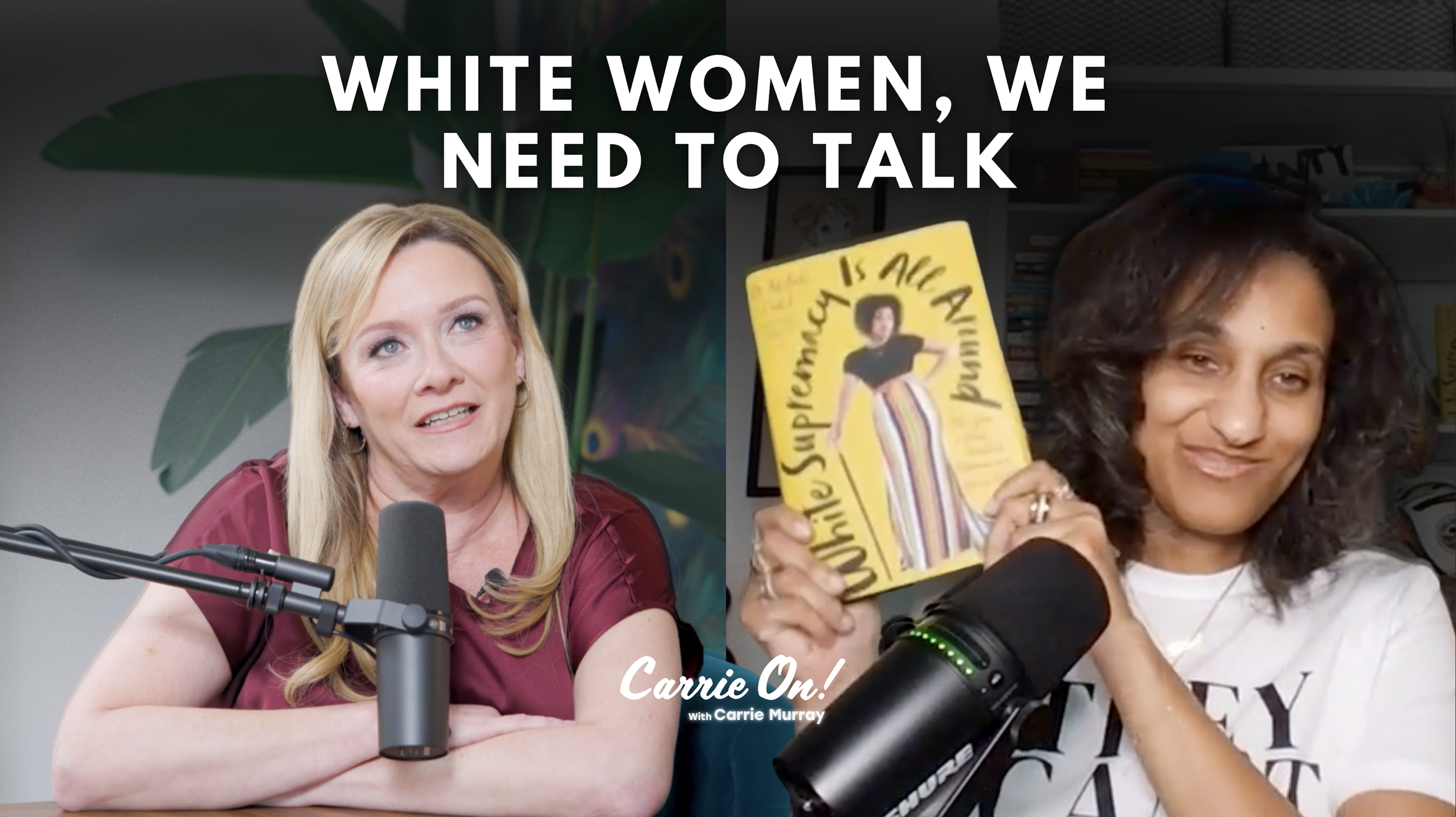
White Supremacy Is All Around — And White Women Are Part of the Problem (And the Solution)
A conversation with Dr. Akilah Cadet that I believe every woman needs to hear right now.
I started Carrie On! because I believe in having the conversations most people avoid — especially people who look like me. And this one? This is the most important conversation I've had on this show.
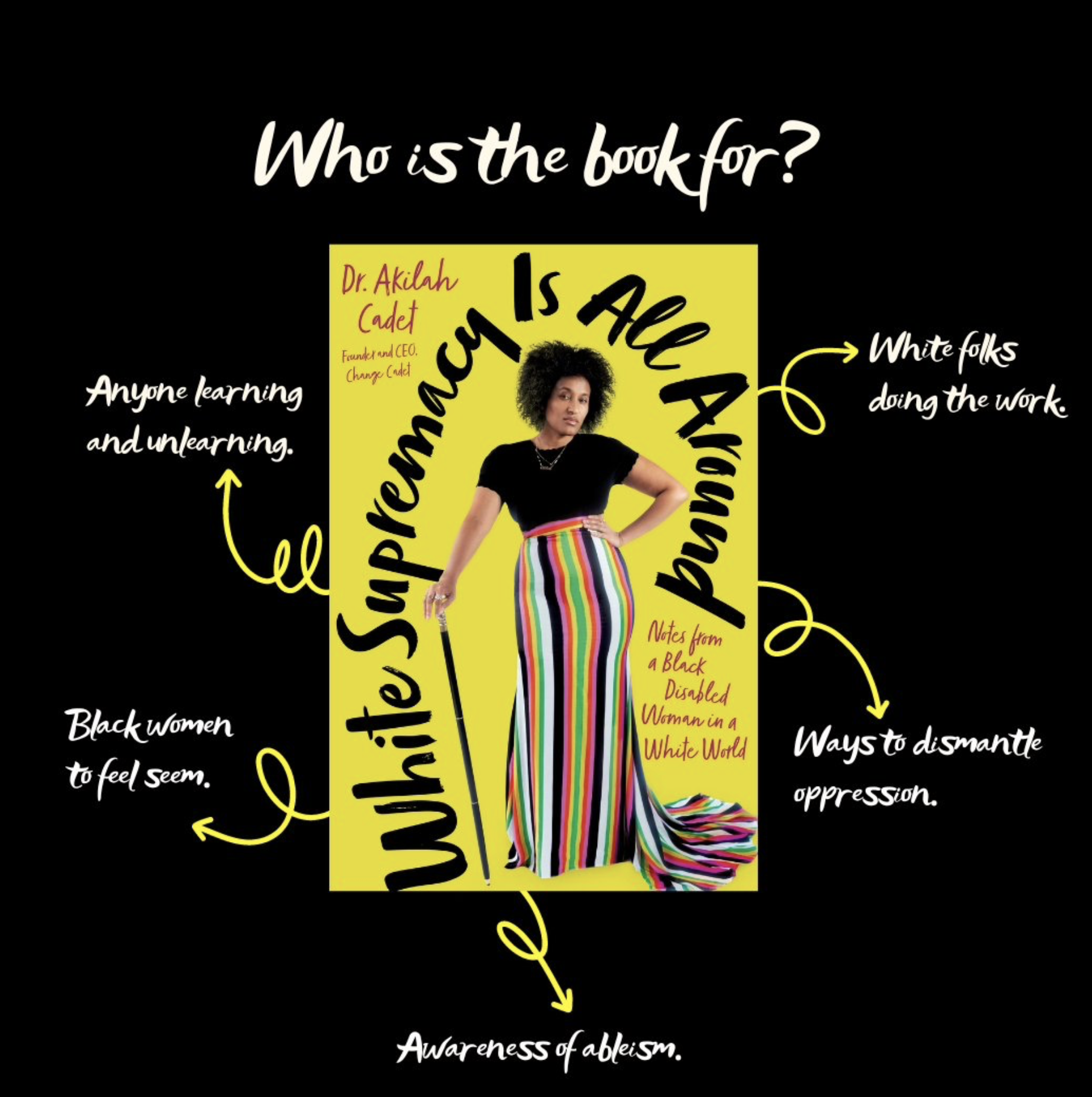
I sat down with Dr. Akilah Cadet, founder and CEO of Change Cadet, Forbes Next 1000 entrepreneur, public health practitioner, and author of White Supremacy Is All Around: Notes from a Black Disabled Woman in a White World. We talked for over an hour about voting rights, power, privilege, and the very specific role white women play in upholding — or dismantling — the systems that are coming for all of us.
With the primaries approaching, I am not letting you scroll past this one.
The Voting Rights Act Was Just Gutted. Here's Why That's Everyone's Problem.
We recorded this episode on April 30th, 2026 — the day after the Supreme Court rolled back the Voting Rights Act of 1965. I asked Dr. Cadet if she was surprised.
She wasn't. She saw it coming.
"From what we've seen with the end of affirmative action, what we've seen with the end of DEI — the most important thing, with Project 2025, is to take away voting rights for oppressed people."
The specific case was rooted in Louisiana redistricting. The state had two Black majority districts out of a vast number of majority-white districts. The Supreme Court said that was unacceptable — while leaving all the majority-white districts untouched. Dr. Cadet broke it down plainly: they're saying you can't draw districts based on race, but the default — everything being majority white — is perfectly fine.
And within an hour of the ruling, states were already changing their redistricting maps.
This is not a coincidence. This is a coordinated dismantling — affirmative action, DEI, and now voting rights — all part of the same through-line. As Dr. Cadet put it:
"It's not just an attack on the Voting Rights Act of 1965. It's a Supreme Court full of white supremacists. It's ending DEI, it's ending affirmative action. It's sending a message that democracy does not include the voice, representation, lived experience, power, and overall existence of non-white people."
And then she asked the question that stopped me cold: What is democracy without the oppressed?
Her answer: "Democracy without the oppressed is white supremacy dipped in capitalism, finished with privilege."
White Women, We Need to Talk
The first chapter of Dr. Cadet's book is called "White Women Are Exhausting." She says it with humor. She says it with love. And she says it with facts.
White women are a primary reason Donald Trump is in office — not once, but across multiple elections. Dr. Cadet walked through each cycle with unflinching clarity: women who could see themselves in Hillary Clinton still chose the man who bragged about grabbing women. Women who called themselves mothers still voted for the candidate with kids in cages. And then, when Kamala Harris ran for president, a woman, many white women still couldn't bridge the gap.
Why? Because whiteness has more power than womanhood. And when white women have the chance to not feel oppressed, many take it — leaning into the comfort and proximity of whiteness rather than the solidarity of shared oppression.
Dr. Cadet's challenge to white women is direct: How does whiteness show up in your life? Why do you love it so much? Why are you comfortable with men telling you what you can do with your body, when there is not one law governing men's?
These are uncomfortable questions. They're supposed to be.
The Difference Between an Ally and an Accomplice
This is the distinction that I keep coming back to — and I think it's the most practically useful thing to come out of our conversation.
An ally puts a Black Lives Matter sign in their yard, posts for Pride Month, and feels good about it. But allyship allows for comfort. It lets you question why others have the fire hose when your house is fine. It gives you an excuse.
An accomplice uses their power and privilege to actively help someone else — because their house is still standing, and they have the resources and infrastructure to do something with that. They're the neighbor who says: Come inside. Here's a blanket. Can I take you somewhere?
Dr. Cadet doesn't mince words: she cannot stand allies. Use any other A word — advocate, activist, accomplice — but not ally. Not if it's giving you permission to be comfortable.
The No Kings marches? Cute. But what did you do the next day? Did you go back to Starbucks? Did you keep shopping at Home Depot? The Instagram post doesn't count if nothing changed on Tuesday.
Think Upstream
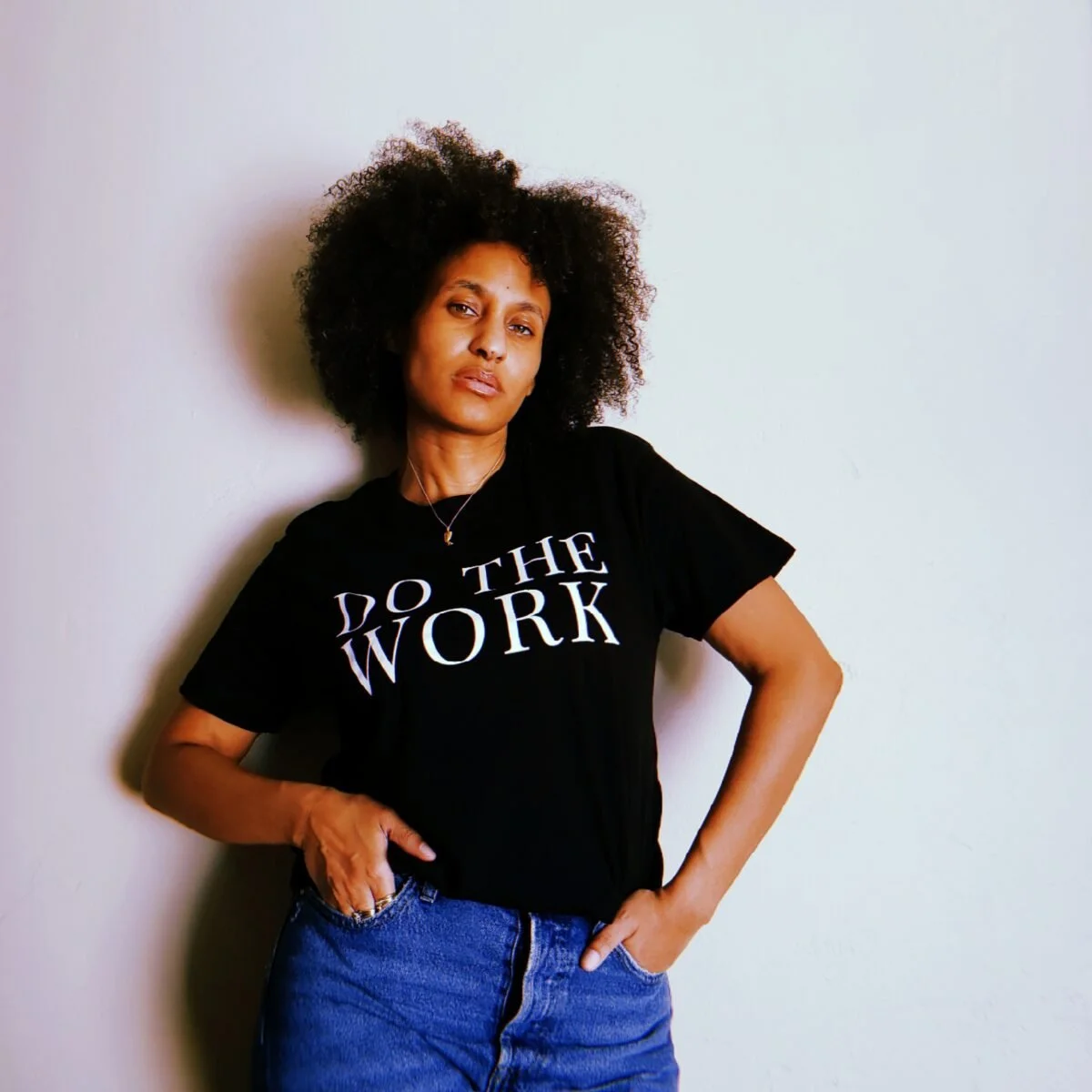
Dr. Cadet is a public health practitioner, and she brought a framework to this conversation that I haven't been able to stop thinking about.
In public health, you look upstream. If a factory is polluting a river, you don't just treat the people who get sick downstream — you stop the pollution at the source. Preventative, not reactive.
So many white women are waiting for the pollution to reach their neighborhood before they care. But here's the thing: the legislation that would have protected their plush neighborhood from contamination — that's the voting rights, the DEI policies, the affirmative action — was what they ignored or voted away. And now it's in their water.
"If we're not doing things for humanity, for all people, we're just upholding values of white supremacy."
Look upstream. That's the call.
Getting Comfortable Being Uncomfortable
I started Carrie On! to create space for exactly this — the conversations that make us squirm, the moments that force us to ask: Why do I feel uncomfortable? Where does that come from?
Dr. Cadet has been getting comfortable being uncomfortable since preschool. She grew up one of three or four Black kids in a predominantly white environment. Being othered wasn't a workshop she attended — it was her life. She has decades of expertise building the muscle that white women are just now being asked to develop.
That's not a reason to feel guilty. It's a reason to do the work. And to stop expecting Black women to do it for you.
Why I'm an Advocate — Not Just a Host
I want to be clear: I am not a bystander in this. I am an advocate — imperfect, still learning, still sitting with discomfort — but committed.
That commitment deepened through this conversation. Dr. Cadet reminded me that the fight against white supremacy is not a single march or a single vote. It's the daily practice of showing up, thinking critically, spending your dollars intentionally, and calling people in — not out — to do better.
Calling someone out is cancel culture. Calling someone in is accountability with a path forward.
We want a path forward.
Listen to the Full Episode
This blog only scratches the surface. Dr. Cadet also talks about:
The corporate brands actively funding white supremacy (some of them are your favorites)
Why critical thinking — not AI — is the most important tool you have right now
Her next book connecting narcissism to supremacism
Her grandmother, Earl Grey tea, and the message to keep crossing the street
Listen on Apple Podcasts.
Listen on Spotify.
Watch on YouTube.
And if this resonated, please share it. Forward it. Put it in your group chat. Your people need to hear it.
Dr. Akilah Cadet is the founder and CEO of Change Cadet and the author of White Supremacy Is All Around. Find her at changecanet.com and on Instagram @changecanet. Listen to her Humane Rights Podcast on all platforms.