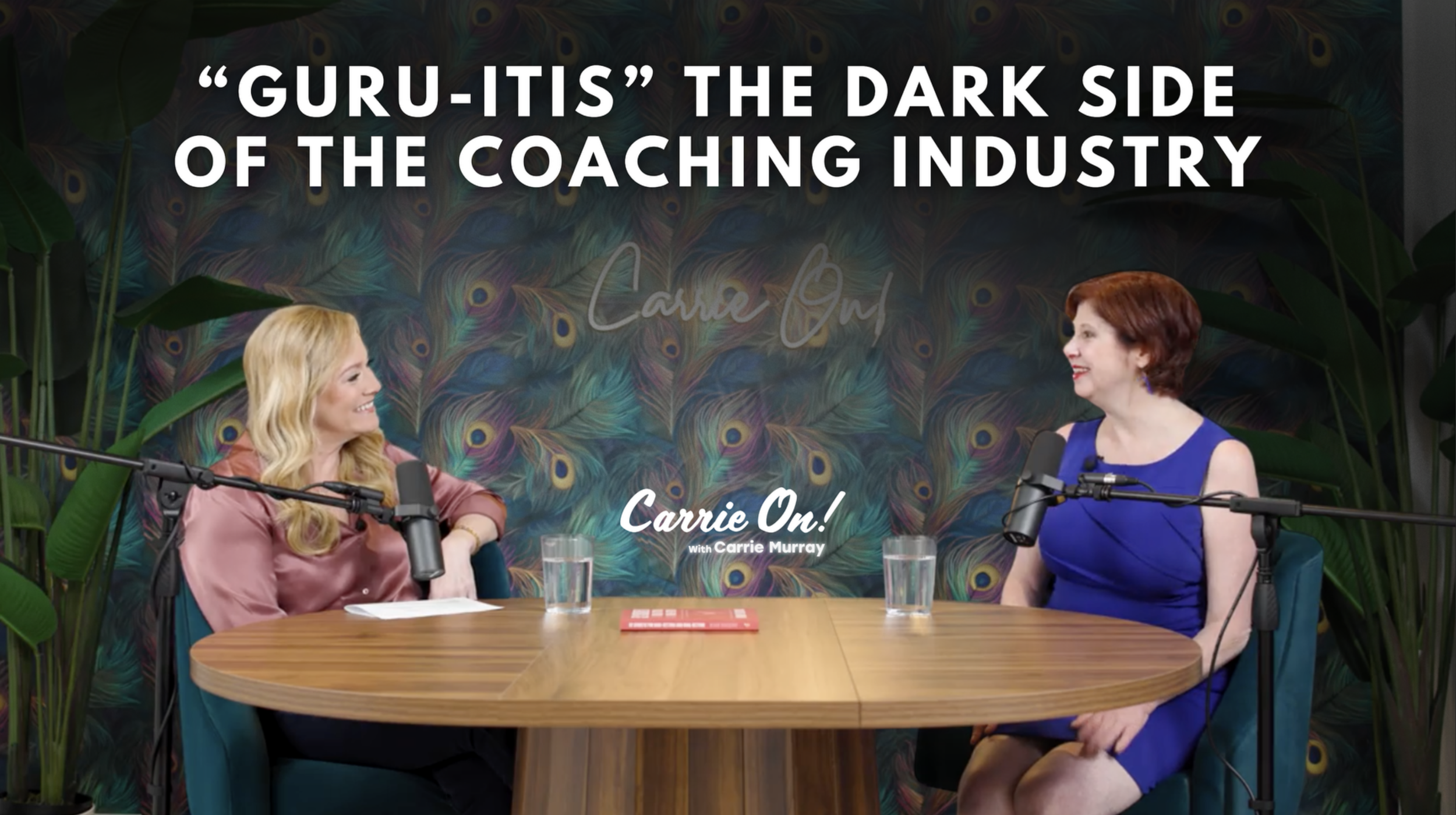
What Is Guru-Itis? How to Stop Following Someone Else's Formula with Debra Eckerling
How to Stop Buying Someone Else's Blueprint and Start Building Your Own Voice
If you've ever walked out of a coaching program—or a weekend conference—feeling more confused, more broke, and somehow more behind than when you started, this one is for you.
Because here's what nobody in the personal development space wants to say out loud:
Not all advice is good advice.
And some of it is designed less to help you and more to keep you coming back.
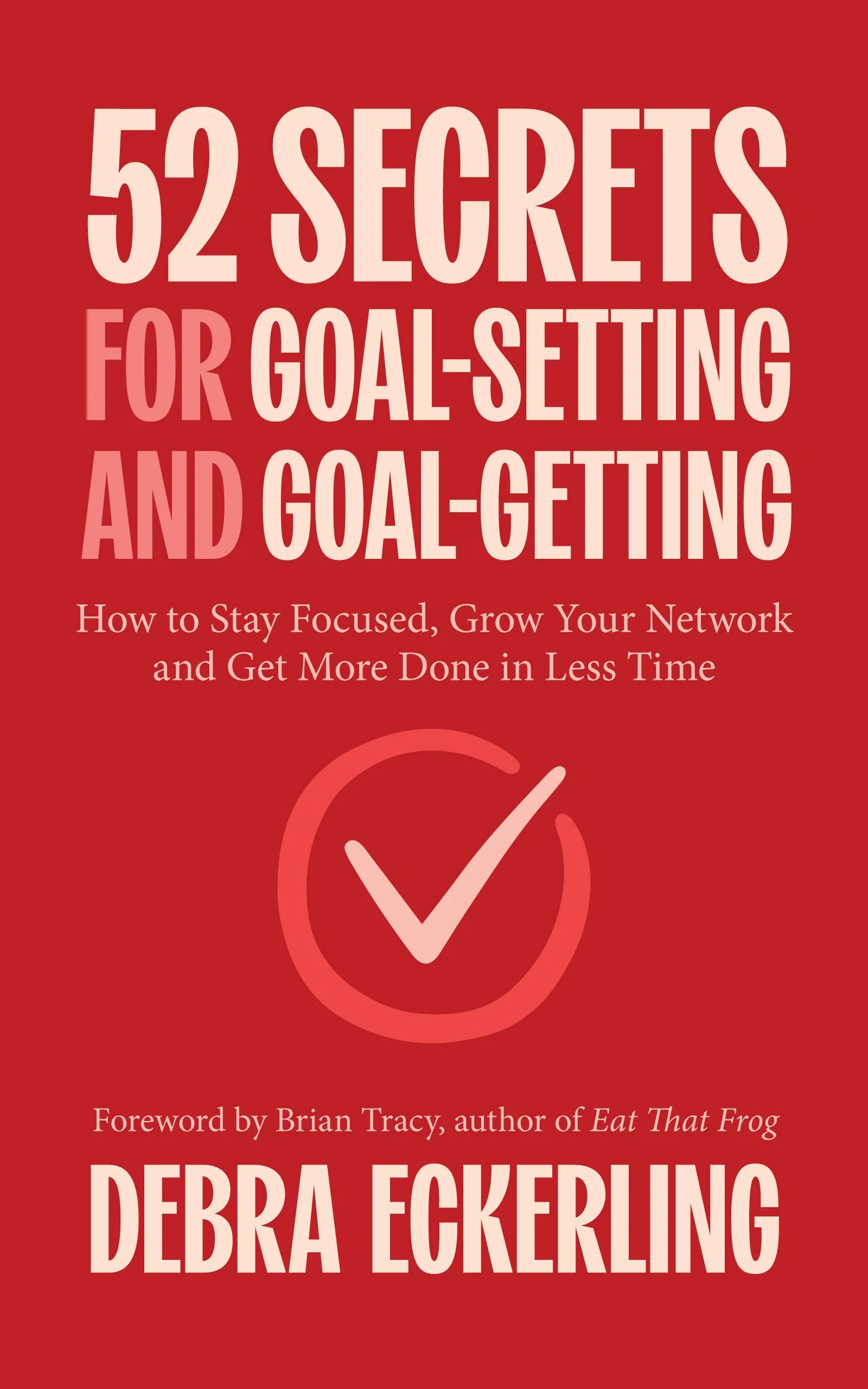
I recently sat down with Deborah Eckerling, the Book Proposal Expert and author of 52 Secrets for Goal Setting and Goal Getting, for a conversation that went places. We talked about the coaching industry, the trap of guru-itis, why so many women with something meaningful to say never share it with the world, and what it actually takes to build a platform that lasts.
It's a conversation I wish someone had handed me years ago.
What Is Guru-Itis?
Guru-itis is what happens when you start outsourcing your instincts to someone else's system.
It sounds like this:
"She built a million-dollar business doing this, so if I follow her exact steps..."
"He said my mindset is the problem. Maybe I just need to believe harder."
"I paid $5,000 for this program. It has to work."
The personal development industry—especially the corner that targets women navigating divorce, career pivots, empty nests, or midlife reinvention—has become incredibly skilled at marketing to uncertainty.
As Deb put it:
"Do exactly what I did and you'll be as successful as I am doesn't work—because we're not living their life."
You don't have their background.
Their timing.
Their resources.
Their relationships.
Or their unique combination of luck and preparation.
A formula built around someone else's life will never fit yours.
The Coaching Industry's Best-Kept Sales Secret
Deb and I talked about a pattern that's surprisingly common at high-ticket conferences.
Friday: Break people down. Dig into their pain, limiting beliefs, and fears until they're emotionally raw.
Saturday: Build them back up. Everyone feels inspired, hopeful, and convinced they've finally found the answer.
Sunday: Sell the expensive mastermind, coaching program, or VIP experience—sometimes with financing available right there in the room while emotions are still running high.
That's not empowerment.
That's a sales funnel built around emotional vulnerability.
The most troubling part?
Many of these programs teach participants to build the exact same kind of funnel themselves.
As Deb simply put it:
"It's icky."
Honestly... I couldn't have said it better.
How to Spot a Real Expert (and Avoid the Scripts)
So how do you know the difference between someone with genuine expertise and someone selling a polished formula?
Look at their experience.
Deb has been helping people set goals and write books since the 1990s. Her methodology wasn't created over a weekend certification—it was built through decades of real clients, real projects, and real results.
Experience matters.
Watch for the endless upsell.
Free group.
Paid membership.
Small mastermind.
Private coaching.
VIP retreat.
If every next level promises the transformation you were hoping to find at the last level, you may be in a funnel—not a community.
Ask whether they've actually lived what you're living.
A younger coach may be incredibly talented.
But if you're navigating midlife, divorce, caregiving, entrepreneurship, or reinvention after 40, there's tremendous value in learning from someone who's walked that road themselves.
Pay attention to the advice.
Real experts give you practical next steps.
Scripts often sound impressive but leave you wondering what you're actually supposed to do.
"You have a scarcity mindset."
"You need to raise your vibration."
"You have to believe it before you receive it."
If the advice can't answer the question, "What's my next step?" it probably isn't actionable advice.
Be careful with pay-to-play opportunities.
The same critical thinking applies when you're trying to build your own platform.
If someone offers to feature you—but you have to write the article, provide the photos, pay the fee, or purchase the opportunity—that isn't earned media.
It's advertising.
The same goes for podcasts that charge guests to appear or anthology books that promise "bestselling author" status in exchange for a contribution fee.
There are exceptions.
But it's worth asking what you're actually buying—and whether there's a real audience waiting on the other side.
What Actually Works
After talking about the traps, Deb shared what she believes does work.
Start with a book proposal.
One of the biggest misconceptions about traditional publishing is that nonfiction authors have to write the entire book before approaching a publisher.
In most cases, they don't.
They need a strong proposal.
Deb teaches what she calls the Three C's:
Concept — What makes your book unique?
Context — Why are you the right person to write it, and who is your audience?
Content — An outline and sample chapters that demonstrate your vision.
When you build a thoughtful proposal first, writing the book becomes much easier because you've already created the roadmap.
Don't dismiss traditional publishing too quickly.
Self-publishing absolutely works for some authors.
But traditional publishing still opens doors that self-publishing often can't—from bookstore placement and media coverage to speaking opportunities and industry credibility.
A publisher isn't simply investing in your manuscript.
They're investing in you.
Research comparable books.
Before writing, identify books similar to yours that have been traditionally published within the last few years.
Your goal isn't to copy them.
It's to understand where your book fits—and what makes your perspective different enough to stand out.
A Better Way to Think About Goals
One of my favorite moments came when Deb explained why so many people struggle with goal setting.
It's usually not because they're lazy.
It's because they skip the foundation.
Her framework—the Deb Method—starts with:
Determine your mission
Explore your options
Brainstorm your path
Only then do you decide on the goal.
Instead of forcing yourself toward a destination that may not even fit, you first get clear on what you actually want.
And perhaps the best reframe of all?
You don't even have to call them goals.
Call them intentions.
Plans.
Dreams.
Aims.
Whatever language motivates you.
As Deb asks:
What's your most recent win?
And what do you want to celebrate one year from now?
Start there.
Your Voice Matters More Than You Think
This may have been my biggest takeaway from our conversation.
If you've spent years building expertise, creating a business, developing a methodology, or learning lessons the hard way, someone needs what you know.
The problem is...
They can't benefit from it if you keep it to yourself.
Whether it's a book, a podcast, a course, or simply showing up online more consistently, your voice matters.
Deb shared one line that has stayed with me ever since:
"Find the who's for your how's."
Figure out where you want to go.
Then find the right person to help you get there.
For me, that's been Deb.
Working with her has been one of the best investments I've made in this next chapter.
Listen to the Full Episode
This blog only scratches the surface of our conversation.
We also dive into publishing myths, platform building, and a live "parlor trick" at the end of the episode that's absolutely worth sticking around for.
🎧 Listen on Apple Podcasts
🎧 Listen on Spotify
📺 Watch on YouTube
About Deborah Eckerling
Deborah Eckerling is the Book Proposal Expert, helping entrepreneurs, executives, coaches, and thought leaders transform their expertise into traditionally published books.
She is the author of 52 Secrets for Goal Setting and Goal Getting, creator of the Deb Method, and co-author of the forthcoming Active Grandparenting.
Find Deb on Instagram