
She Was Prescribed 18 Medications After Asking for Help. Here's What Happened Next.
A Carrie On! Conversation with Angie Peacock — Army Veteran, Trauma-Informed Coach & Psychiatric Drug Withdrawal Survivor
⚠️ Trigger Warning: This post and the episode it references contain discussion of sexual assault, suicide, and psychiatric medication. If you need support, please call or text 988 (Suicide & Crisis Lifeline) or contact the National Sexual Assault Hotline at 1-800-656-HOPE (4673).
What does it look like when someone asks for help — and the system gets it completely wrong?
That's the question at the heart of this week's episode of Carrie On! with Carrie Murray, and it's one that Angie Peacock has spent years living the answer to.
Angie is a U.S. Army veteran, trauma-informed coach, and subject of the award-winning documentary film Medicating Normal. Her story is one of compound trauma, systemic failure, and an extraordinary fight to reclaim herself — and it's one that 1 in 4 women may recognize pieces of in their own lives.
Who Is Angie Peacock?
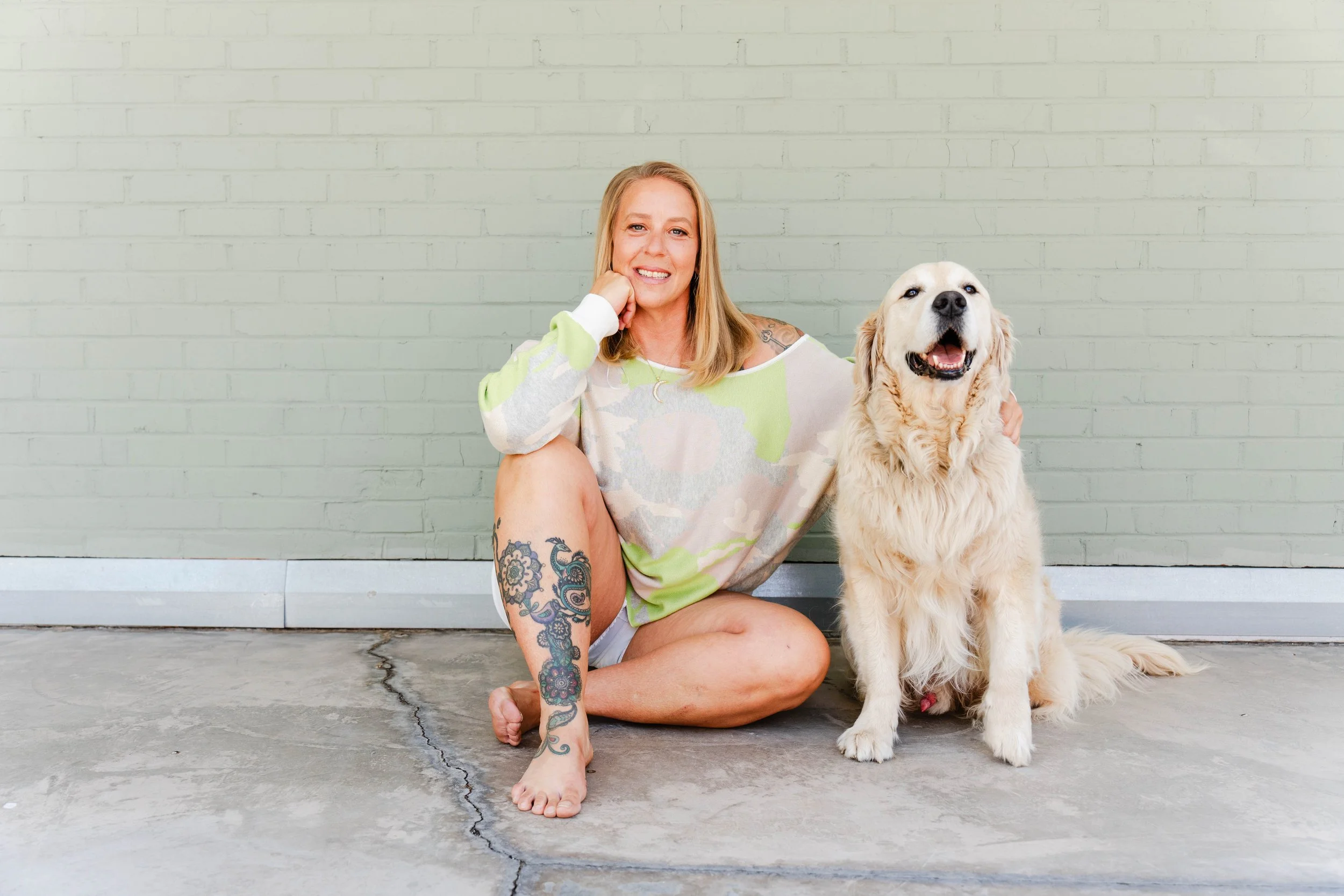
Angie joined the Army at 18, inspired by her grandparents' World War II service and a hunger for something meaningful. She served seven years across Germany, South Korea, Iraq, North Carolina, and Washington State — and was, by her own description, a high achiever and a bit of a perfectionist.
But her service came at an enormous personal cost.
While stationed in South Korea, Angie was sexually assaulted by a fellow non-commissioned officer of higher rank. When she filed a report, she was essentially warned that pursuing it would mean being put on trial herself — painted as a "party girl." She chose not to continue. She coped, re-enlisted, and threw herself into her work.
Then came Iraq.
Angie was part of the first surge following 9/11 — one of the convoys you may have watched roll into Baghdad on CNN. After six months, she was medevaced out due to illness. The day after she returned to Germany, her convoy was hit. One of her soldiers came back on a gurney.
That was the moment she walked to the psychiatry office.
"Just Pills." No Therapy. No Informed Consent.
What Angie received when she asked for help was not a conversation. It was not a referral to therapy. It was not a space to process what she had survived.
It was a prescription.
"I was given a medication right away. Not really any therapy, no talking, just: you have post-traumatic stress. Take pills."
Within two weeks, she was getting worse. Within two years, she was on 18 simultaneous medications — and had completely lost touch with herself. She collected diagnoses the way the system handed them out: PTSD, major depression, panic disorder with agoraphobia, sleep disorder, fibromyalgia, chronic fatigue syndrome, generalized anxiety disorder.
Nobody questioned the accumulation. Therapists were trained to stay in their lane and not discuss medication. Doctors signed off on each other's prescriptions without oversight. And Angie — one of the most capable people you could meet — could barely brush her teeth.
The Decade-Long Taper (And What Doctors Got Wrong)
Eventually, a doctor looked at her chart and said: "Who put you on all this?" He attempted to take her off ten medications in a hospital overnight. She hallucinated. It was not good. She spent 45 days inpatient and was treated like an addict.
What followed was ten years of tapering off the remaining medications — and then, when she reached her last one, something the medical system still doesn't fully acknowledge: psychiatric drug withdrawal.
The four and a half years after her final medication nearly killed her.
Suicidal and homicidal thoughts (which terrified her — "I won't even kill a spider in my house")
Full-body nerve pain and burning, including the soles of her feet
Neuroinflammation so severe her brain felt like it was trying to leave her skull
Intrusive thoughts
Sleeping 20 minutes to one hour per night for an entire year
When she brought stacks of peer-reviewed medical journal articles documenting benzodiazepine withdrawal to her doctor — articles she'd found herself through university database access — he wrote in her chart:
"Patient believes she is experiencing benzodiazepine withdrawal, and that brings her comfort."
She was dismissed. Again.
The Documentary That Kept Her Alive
At the eight-month mark of withdrawal, Angie was found by the filmmakers behind Medicating Normal — a documentary that investigates the overprescription of psychiatric medications in America and the people harmed in the process.
Being included in the film gave Angie something she didn't have before: a reason to stay.
"I can't end it because I don't want the end of the film to be like, 'and she's a great person, but she ended it.'"
Medicating Normal went on to screen over 300 times, win audience awards at festivals including Santa Barbara and New York City, and spark conversations across the country about informed consent in psychiatric care.
What She Wants You to Know
Angie is emphatic: she is not anti-medication.
"I am saying that we all need to be given informed consent — amount, risks, benefits, and alternatives."
But she is asking us to take seriously what the medical system has been slow to acknowledge:
1 in 4 women is currently on psychiatric medication — many placed on it during postpartum depression, hormonal transitions, or periods of life stress, and never reevaluated
Medications are not studied long-term, and they are almost never studied in combination — especially not in women who are also veterans
Safe deprescribing is not a quick taper — for some antidepressants, it can take two to five years
There are currently an estimated 200,000 people attempting to taper off psychiatric medications without medical help, in Facebook groups, because the medical system won't support them
Laypeople developed the safest tapering protocols — later validated by researchers using PET scans
And perhaps most powerfully: when we medicate someone before they've had the chance to learn that their emotions are survivable, we rob them of something fundamental.
"I learned to be afraid of my emotions. And I didn't have someone outside of me saying: this is normal. This big emotion has meaning. You can listen to it. So then when you get put on a medication, you get robbed of learning that."
Van Life, Road Magic & Learning to Be Human Again
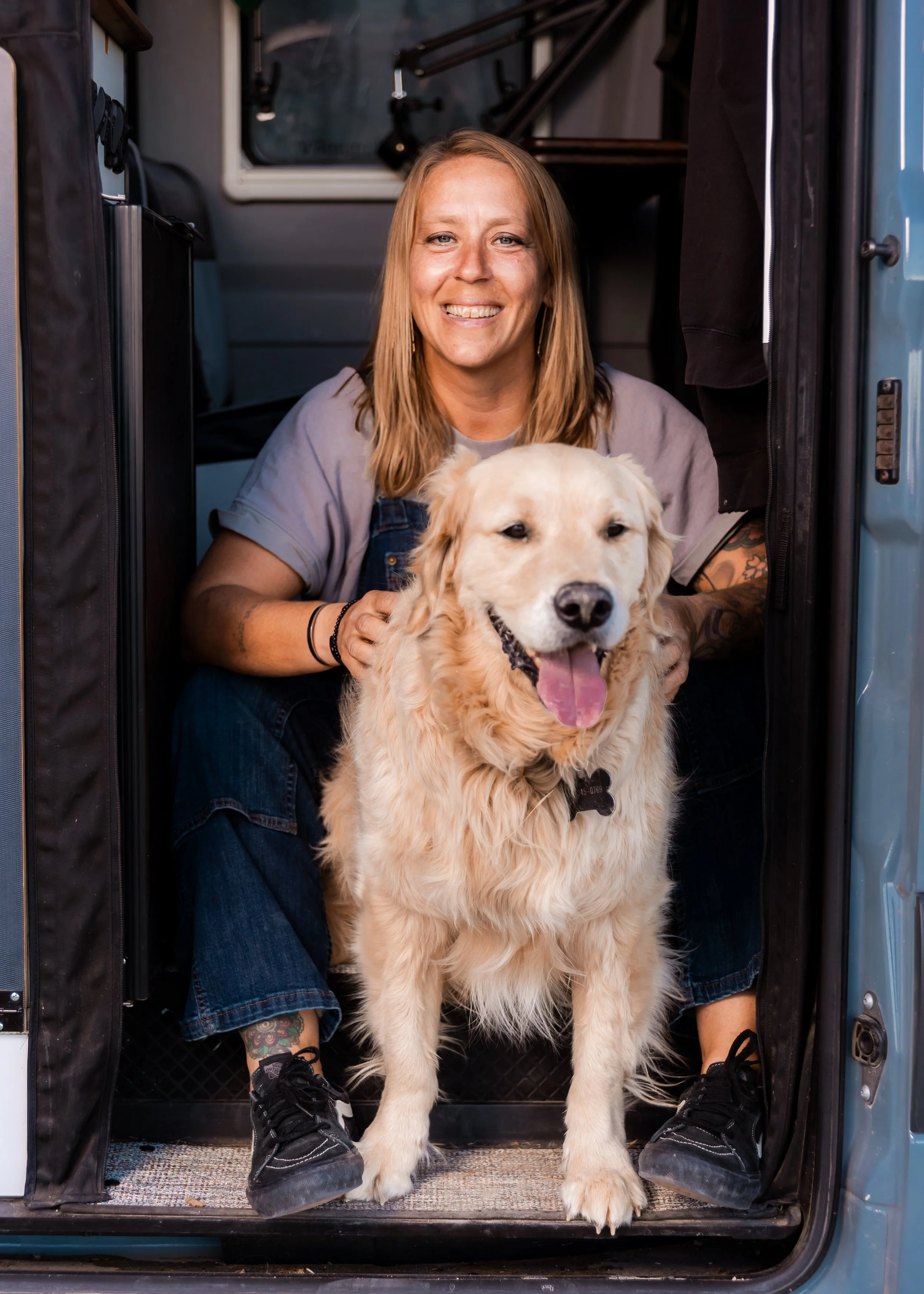
Today, Angie has been on the road for seven years in her van — over 215,000 miles across the continental US and into Mexico, with her service dog Raider by her side.
What started as a logistical solution for film screenings (she couldn't fly due to sensory sensitivity during withdrawal) became her most powerful healing tool.
Forcing herself to do laundry, buy groceries, and talk to strangers broke her agoraphobia. Natural light regulated her sleep. Walks with Raider rebuilt her vestibular system. And the kindness of strangers — people who made her lunch and expected nothing in return — taught her something the medical system hadn't:
People care about you. The world is not a dangerous place. You are allowed to be here.
She calls it "road magic." Her van life Instagram documents the lighter side of this extraordinary journey.
Practical Steps If You're Navigating This
Whether you're questioning your own medications, supporting someone who is, or just becoming aware of this issue for the first time, Angie offers concrete starting points:
Talk to a pharmacist. Ask for a full medication review. Pharmacists understand drug interactions and deprescribing principles better than most prescribers.
Read the full FDA pamphlet for every medication you take. Search "FDA pamphlet [drug name]" — the risks are listed, even if they were never explained to you.
Find a holistic-minded doctor who supports gradual, informed tapering if that's what you want.
Visit angpeacock.com for free deprescribing resources specifically for psychiatric medications.
Give yourself permission to ask questions. You are not being difficult. You are being your own best advocate.
This Is Mental Health Awareness Month — Let's Talk About It Honestly
May is Mental Health Awareness Month. And real awareness isn't just green ribbons and "it's okay to not be okay."
It's asking: Are we actually healing? Or are we just being managed?
It's making space for the people who tried the system and were harmed by it.
It's listening — not redirecting, not professionalizing, not minimizing — when someone tells us something hard.
"Don't be scared of emotion and scary things. We need more community, less professionalization of our emotion." — Angie Peacock
Listen to the Full Episode
Angie's full story, including her thoughts on informed consent, van life healing, and what she wishes she'd known, is all in this week's episode of Carrie On! with Carrie Murray.
🎧 Listen on Apple Podcasts
▶️ Watch on YouTube
🎙️ Also available on Spotify
Connect with Angie Peacock
🌐 Website:https://www.angiepeacock.com
Connect with Carrie Murray & Carrie On!
🌐 Website: www.carrie-murray.com
📺 YouTube: www.youtube.com/@carrie_murray
🎧 Apple Podcasts: https://podcasts.apple.com/us/podcast/carrie-on-with-carrie-murray
📱 Instagram: @_carriemurray_
If this episode resonated with you, share it with someone who needs to hear it. And if you're going through something hard right now, please know — you are not alone. Keep your head above the chaos, and carry on. 💜
