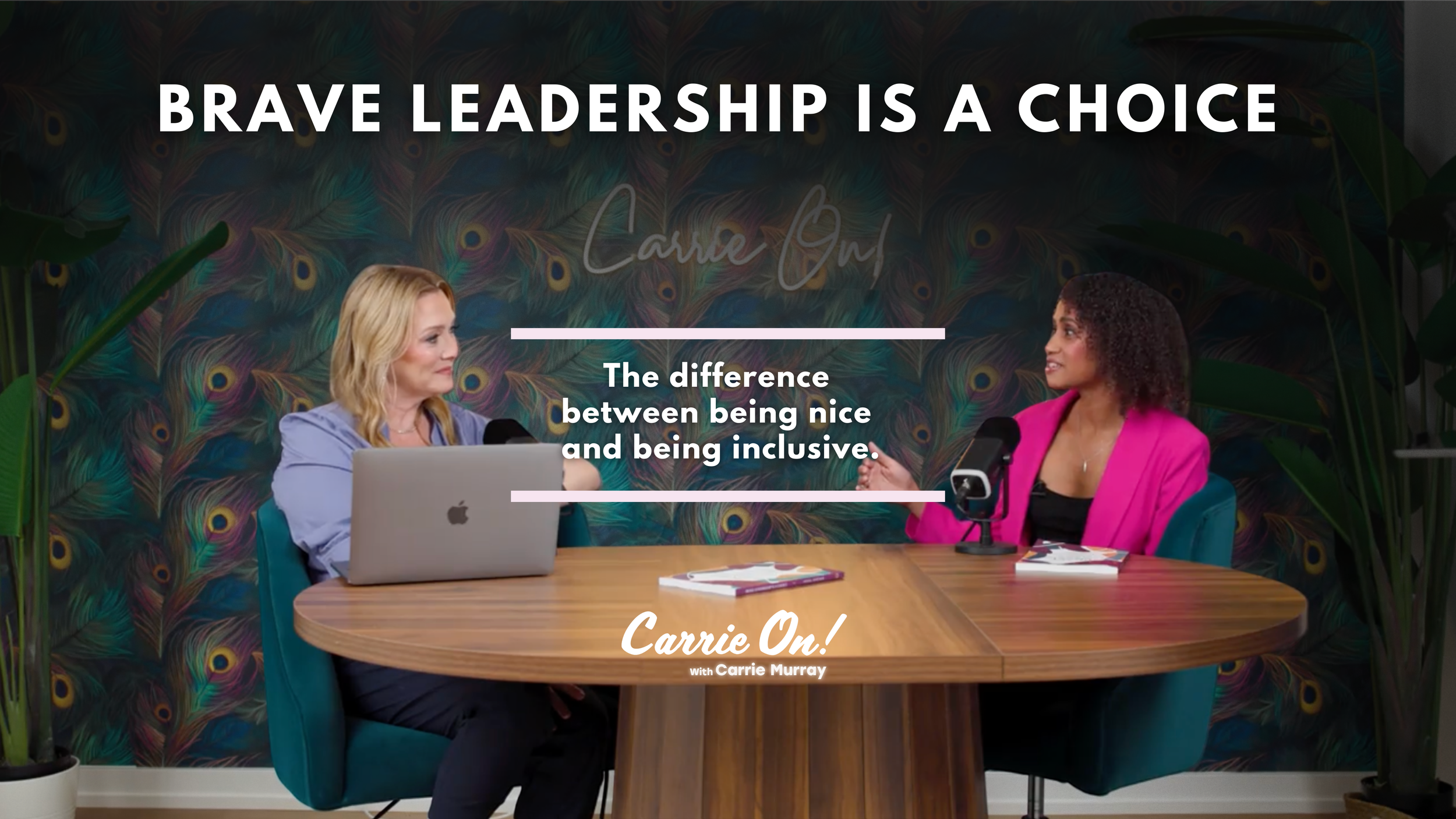
Brave Leadership Is a Choice: Getting Comfortable With Discomfort (and Using Your Voice Anyway) with Crystal Whitaker
There are episodes of Carrie On! that feel like a conversation.
And then there are episodes that feel like a mirror.
This one—with Crystal Whitaker, founder of Crystal Lily Creative and author of Brave Leadership Is a Choice—is the kind of episode that doesn’t just inspire you. It asks something of you.
Because brave leadership isn’t a vibe.
It’s not a caption.
It’s not a panel title or a job title or a “personal brand.”
It’s a choice.
A choice you make when things get awkward.
When you don’t know what to say.
When your body tightens and your nervous system starts screaming, Abort mission.
When you realize you’ve been “nice”… but not inclusive.
When you want to look away… but you don’t.
And if you’re leading anything right now—a team, a business, a family, a community, a life—this conversation is a masterclass in what it means to stay human while doing hard things.
The Origin Story: A Five-Year-Old Teacher
When I asked Crystal where it all started—where that brave, grounded leadership came from—she didn’t say “a strategy” or “a brand pivot.”
She said: five-year-old Crystal wanted to be a teacher.
Not necessarily in the traditional “elementary school classroom” way, but in the truest sense of the word: someone who helps people see themselves and move through the world with more clarity.
Crystal is also the oldest of two siblings, raised to be independent. And in her story you can feel it—how independence becomes resilience, how resilience becomes resourcefulness, how resourcefulness becomes a kind of grounded bravery.
She moved around a lot as a kid. New places. New schools. New environments.
And if you’ve ever had to constantly adapt to survive, you understand: adaptability can become a superpower… and a wound.
Crystal described being extremely observant, curious, full of questions—the “why why why” kid who always had a case for something. At one point her mom even thought she should be a lawyer.
Crystal laughed and said she’s glad she didn’t.
But the truth is: she became something even more powerful.
She became someone who can name what other people avoid.
“Not Black Enough, Not White Enough”: The Belonging Gap
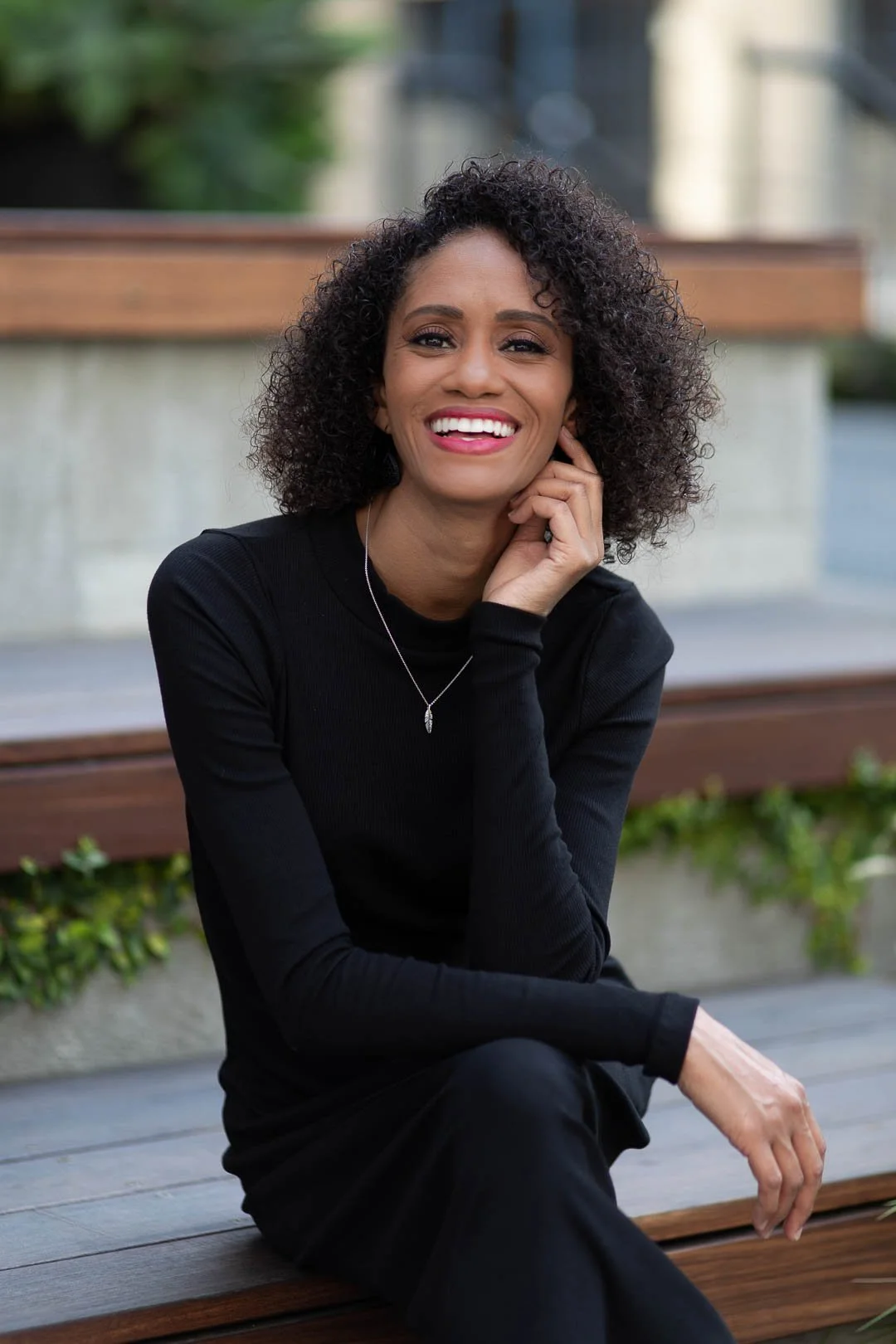
We talked about what it was like growing up biracial—how Crystal moved between predominantly white schools and predominantly Black schools, and how each came with its own kind of identity friction.
In predominantly white spaces, she internalized things she didn’t even realize were being absorbed—biases, assumptions, messages about what “normal” looked like.
And when she moved to a predominantly Black school for the first time, she remembers being worried.
Not because she didn’t want to be around kids who looked like her.
But because she didn’t know what she had internalized until she was inside a new environment that reflected it back to her.
She shared a brutal truth: in hindsight, she understands why the Black kids picked on her.
She didn’t “fit,” and it made her an outcast.
Then she said something that landed like a lightning bolt:
“We’ve talked about the difference between being nice and being inclusive.”
Because in middle school, the white kids were “nice” to her.
But niceness isn’t belonging.
Sometimes “nice” is just a smile before the harm.
Sometimes “nice” is inclusion with strings attached.
Sometimes “nice” is we’ll tolerate you if you stay small.
Crystal shared experiences of being invited to sleepovers and parties… where she was also the target. Easy to pick on. Easy to embarrass.
The kind of “inclusion” that comes with humiliation isn’t inclusion at all.
It’s violence with a smile.
The First Time She Felt Included
Crystal told a story about moving back to central Florida and meeting a girl named Rachel in gym class.
Rachel turned around, introduced herself, and said, “You’re new here. We should be friends.”
No politics. No testing. No probation period.
Just warmth.
Rachel introduced her to other people. The school was more diverse—more mixed backgrounds, more cultures, more kids who didn’t fit into one neat box.
And something shifted.
Crystal finally felt the relief of being in a space where there was room to ebb and flow—where people could exist without constantly proving they belonged.
The takeaway here is simple but huge:
Sometimes belonging isn’t about being loved by everyone.
Sometimes it’s about finding one person who sees you and says, Come sit with us.
The Leap: Moving to LA With $5,000 and a Dog Named Lily
At 25, Crystal did what so many of us dream about and fear at the same time:
She sold everything that wouldn’t fit in her car.
She packed up her life.
And she drove to Los Angeles with about $5,000 and her dog, Lily.
(And yes—that’s where “Crystal Lily” comes from. Legacy, baby.)
She described herself as determined, independent, resourceful.
The kind of person her mom calls “a cat”—because she lands on her feet.
And she did.
She took contracts off Craigslist.
She walked dogs.
She sustained herself long enough to build something real.
And then she did something wildly smart and wildly brave:
When she traveled for event work, she’d join Facebook groups in every city she visited and offer free photo sessions to build relationships, expand her portfolio, and stay in motion.
That’s not just hustle.
That’s community building.
It’s also a theme that comes back again later, when Crystal talks about what we need now more than ever.
Inclusive Imagery: Breaking the “Default Settings” of Photography
Crystal started in wedding photography—then noticed something that most people don’t think about until it’s pointed out:
A lot of photography is built on heteronormative, patriarchal assumptions.
The bride centered.
The groom as accessory.
The “perfect family” posed like a formula.
The Pinterest board that quietly tells you what love should look like.
Crystal’s approach was different.
Not because she had a checklist called “inclusive poses.”
But because she refuses to force people into roles they didn’t choose.
She doesn’t direct couples into artificial power dynamics.
She gets to know them.
She asks questions:
Who’s more outgoing?
Who’s more silly?
What’s your natural rhythm together?
And she lets their relationship lead.
That—right there—is leadership.
Because inclusive leadership isn’t a script.
It’s the willingness to design spaces where people don’t have to shrink to fit.

How the Work Expanded: From Photography to Inclusive Leadership
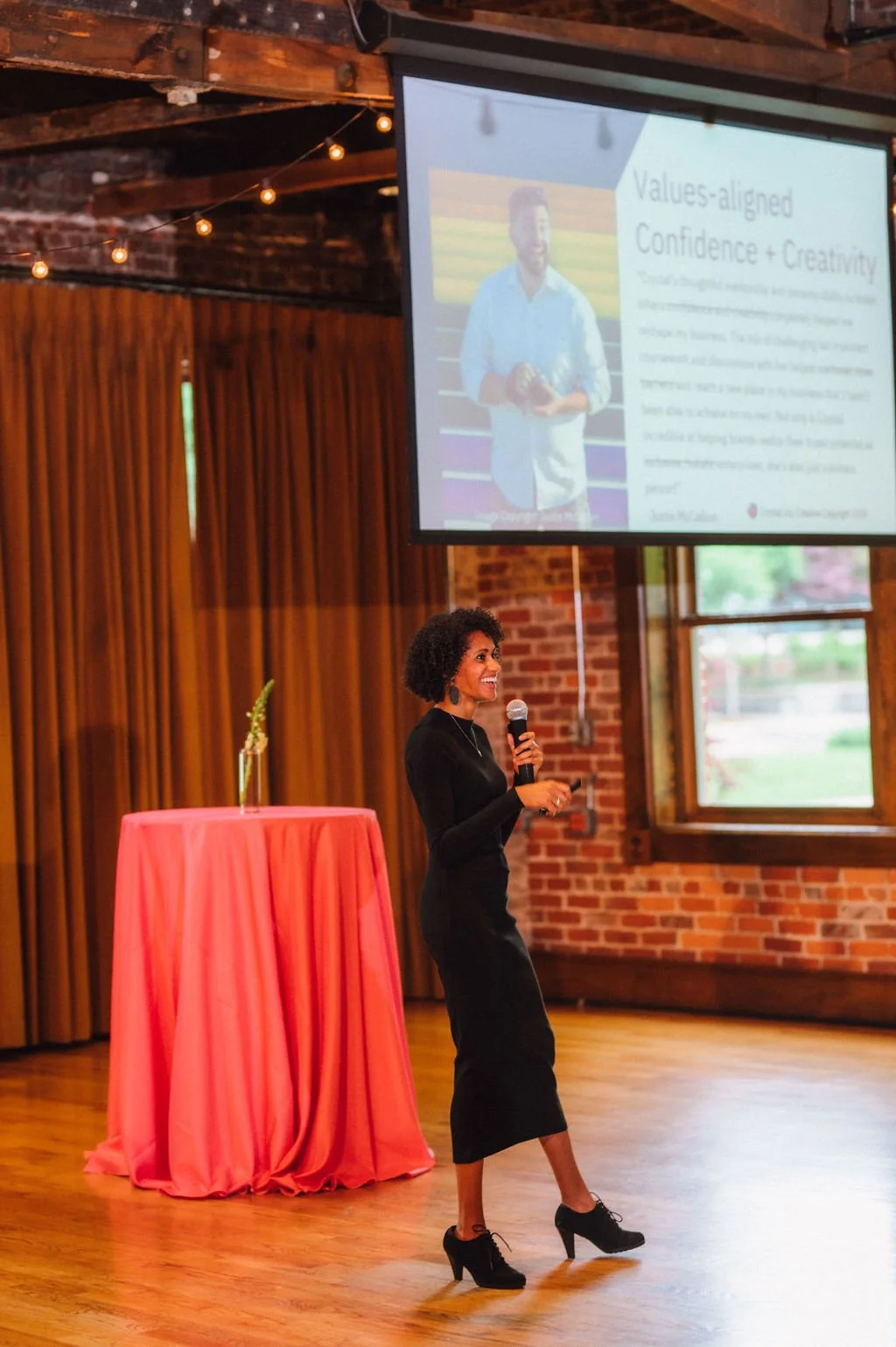
Crystal credited Paige Ray (who helped connect us) for recognizing her potential in the brand space and encouraging her to expand beyond weddings.
From there, Crystal’s corporate background kicked in and she saw the gap:
People weren’t just craving beautiful photos.
They were craving alignment.
They wanted imagery that actually matched their voice.
Their values.
Their truth.
Their lived experience.
And then something happened:
People started asking her how she was doing it.
How her business was so diverse.
How her language felt so inclusive.
How her representation wasn’t performative.
At first, Crystal was confused.
Because for her, this wasn’t “a strategy.”
It was her life.
But once she realized others needed support—and were afraid of saying the wrong thing—she began offering mentorships and trainings.
And then 2020 happened.
2020: The Duality of Imposter Syndrome and Truth Pouring Out
Crystal described the beginning of the pandemic and the racial reckoning of 2020 with honesty and complexity.
On one hand, she felt imposter syndrome about teaching groups at that level.
On the other hand?
It all poured out of her.
Because when you’ve lived a lifetime navigating identity and belonging, the moment the world starts asking questions you’ve been living inside for decades… something opens.
Crystal shared a difficult reality:
She knows she’s “white palatable.”
And that people listen to her because of it.
That’s a strange privilege to carry—especially when the world reads her as a Black woman.
But she uses it as fuel, not comfort.
She uses it to translate truths people might otherwise reject.
The Hardest Conversation: Wanting Her Mom, and Not Getting Her
Crystal shared an incredibly raw story about calling her mom after George Floyd was murdered.
She was quarantined alone in LA.
Freshly divorced.
Already worn down by grief and life and the weight of seeing atrocity after atrocity.
And she wanted her mom.
But when Crystal said, “You could start with Black Lives Matter,” her mom snapped.
And Crystal broke.
That moment—the one where your pain is met with defensiveness instead of care—is the kind of moment that changes a relationship forever.
Crystal took space for two to three months.
Then one night, in the middle of insomnia, they talked until 5 a.m.
And Crystal learned something that stunned her:
Her mom had never considered Crystal would have a different experience in the world because of her skin.
Crystal’s response was essentially: How could you not see it? You have three kids.
And yet… that conversation became the beginning of something.
A different kind of relationship.
An ongoing dialogue.
Even now, Crystal’s mom is trying to have conversations with other family members about privilege.
Is it perfect? No.
But it’s movement.
And movement is what brave leadership requires.
Writing the Book: Stop Writing a Book and Start Teaching Masterclasses
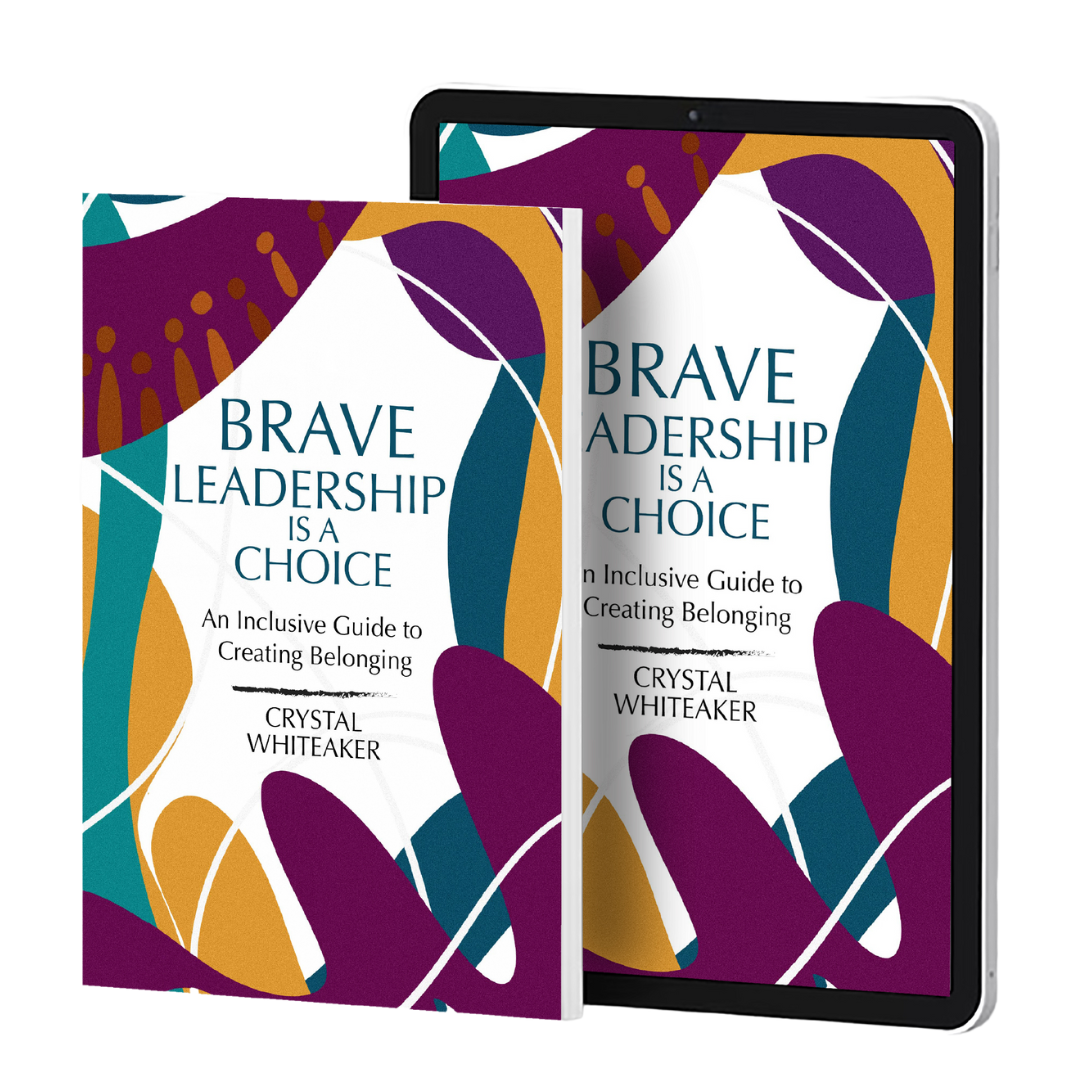
When it came time to write Brave Leadership Is a Choice, Crystal didn’t sit down and “write chapters.”
Whatever it is, the way you tell your story online can make all the difference.
Someone told her something brilliant:
Stop trying to write a book. Write masterclasses.
So she did.
She created a series of masterclasses, taught them, and took notes on what resonated and what didn’t.
That became the book.
What surprised her most?
How little people knew.
Things that felt basic to her—because identity work is part of her everyday life—were new information for many people, even now.
And instead of becoming cynical about it, Crystal made a conscious decision:
She would not lead with judgment.
She would lead with compassion.
Because the truth is: many people have lived in systems designed to keep them busy, distracted, and isolated.
Segregation still exists in “non-segregated” ways.
Exposure is limited.
And capitalism rewards survival mode, not reflection.
That’s not an excuse.
But it is a context.
And good leadership understands context.
The Quote That Stopped Me Cold: “Violence With a Smile”
Crystal read a passage from her book that I’m still thinking about:
She talked about the “microcosms” that make up the bedrock of white supremacy—small, overlooked moments that are dismissed because they aren’t “the big loud stuff.”
And then she said something hauntingly accurate:
The violence in those microcosms isn’t what you normally perceive as violence.
Because it’s all done with a smile.
As long as you behave according to the expectations set forth for the comfort of whiteness, you can be recognized, included, supported.
But the moment you raise an issue that threatens that comfort?
Your experience can be erased in a single conversation.
“And that is violent.”
That’s brave leadership, right there: naming harm that people want to rebrand as “no big deal.”
So What Can Leaders Do?
I asked Crystal: what can someone do—someone who doesn’t believe they’re racist or a white supremacist—if they genuinely want to lead better?
Her answer was simple. Not easy. Simple.
Do your shadow work.
Sit with yourself.
Who are you?
What do you believe?
Why do you believe it?
Why do you behave the way you do?
And she offered examples that cut through defensiveness:
Why do you cross the street when someone who looks different is walking toward you?
Why do you clutch your purse?
Why do you assume what you assume about immigrants?
Bravery starts with curiosity about your own reflexes.
Not your intentions.
Your reflexes.
The Solution She Keeps Coming Back To: Community
When the conversation turned to the state of the world—the fear, the grief, the rage—Crystal didn’t offer a neat answer.
She offered something real:
Build community.
Know your neighbors.
Create support systems.
Stop relying on “big systems” to save you.
And here’s the part I loved:
Not community as transaction.
Not “what can you do for me.”
Community as collaboration.
“What can we do together?”
That’s leadership.
What’s Next: A Pilot Program Supporting Trans, Non-Binary, and Gender-Expansive Entrepreneurs
Crystal shared a project she’s currently leading with LA County Department of Mental Health:
A three-month program supporting 10 trans, non-binary, and gender-expansive business owners with leadership development, brand development, messaging foundations, bookkeeping, tax/legal support, website help, photo/video, networking, pitching—and even stipends for participation.
It’s the kind of program that should exist everywhere.
And the kind of leadership that proves brave leadership isn’t theory.
It’s action.
The Final Word: Use Your Voice (and Don’t Co-Opt Movements)

In her closing thoughts, Crystal said two things I want tattooed on the inside of every leader’s eyelids:
Use your voice.
Your power is in your voice. Start there.
Don’t co-opt movements.
Show up for the cause, yes—but don’t take it over.Don’t rewrite it to make yourself the hero.
Don’t treat justice like a trend you can rebrand.
There’s room for multiple groups to get free at the same time.
Anything else is just recycled oppression in a different outfit.
If You’re Trying to Lead Right Now…
Here’s what I want you to know after this conversation:
You don’t have to be perfect.
You don’t have to have all the right words.
You don’t have to “do all the things.”
But you do have to choose.
Choose to stay in the conversation.
Choose to get curious when you want to get defensive.
Choose to do the inner work when it would be easier to point outward.
Choose community over isolation.
Choose sustainability over performative burnout.
And choose to keep using your voice.
Because brave leadership isn’t a moment.
It’s a practice.
And you’re never done.
Listen to the episode on Apple Podcasts or Spotify or watch on Youtube.
Want to connect with Crystal?
Crystal’s work, resources, and her free Brave Leadership Roundtable are at: crystallily.co
And if this episode hit you in the chest the way it hit me—share it.
Send it to the friend who’s trying.
The leader who’s learning.
The woman who’s waking up.
The person who’s ready to choose courage again.
As always… keep your head above the chaos and Carrie On!
Find Crystal’s book HERE.
Follow Crystal on Instagram HERE.
Connect with Crystal on LinkedIn HERE.