
Dr. Portia Preston on the Hidden Cost of Hustle: Why Women—Especially Black Women & Caregivers—Are Paying the Highest Price
Hustle culture has been glamorized for so long that many of us don’t even question it anymore—it’s simply the air we breathe. The “grind” is praised, exhaustion is normalized, and burnout is framed as a personal failing instead of what it truly is: a public health crisis hiding in plain sight.
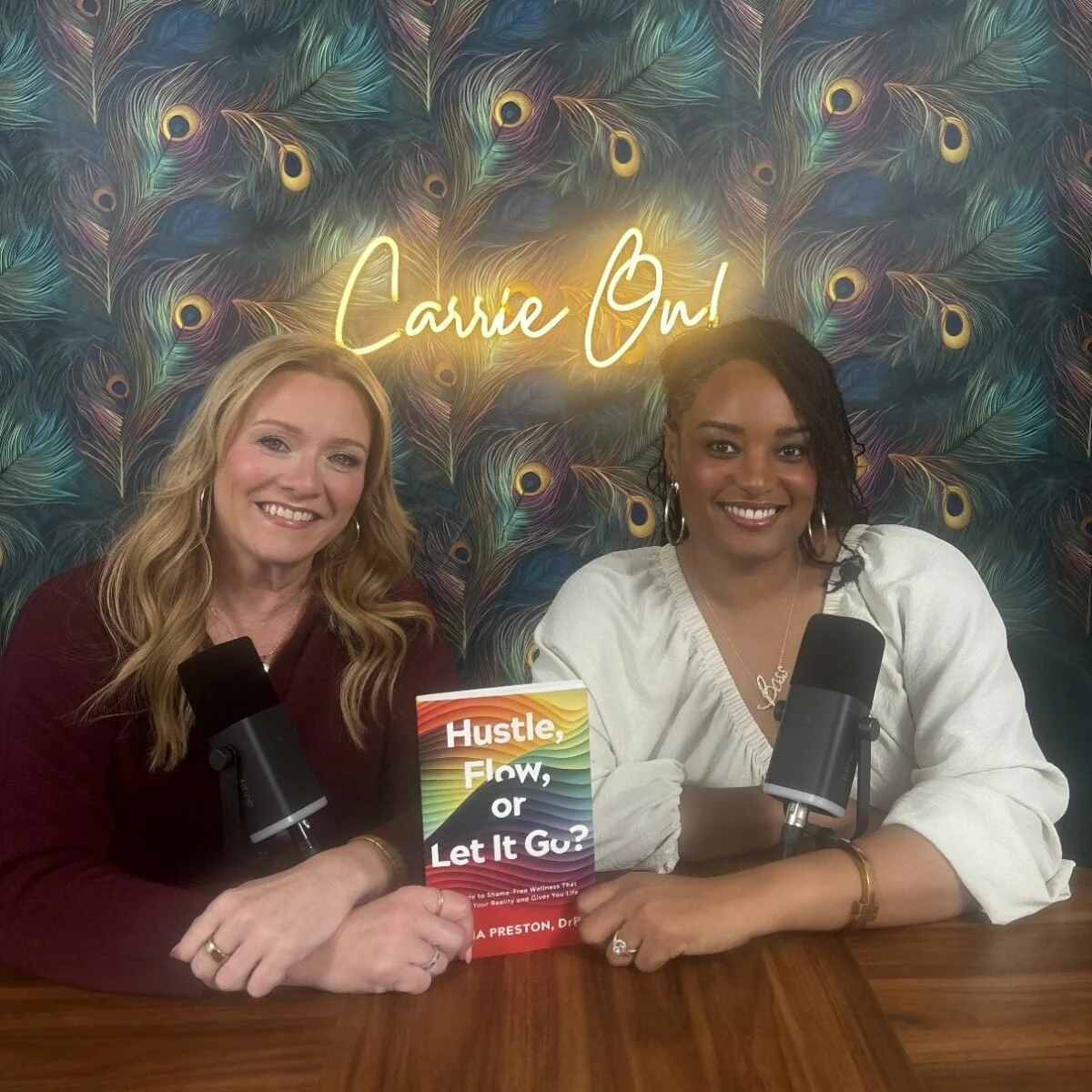
But in my recent Carrie On! conversation with Dr. Portia Preston—2x TEDx speaker, public health expert, and author of the book Hustle, Flow, or Let It Go?—she revealed something deeper, something we feel but rarely name.
Hustle has a cost. And some of us are being charged more than others.
In this blog, we’re unpacking how hustle culture impacts women, why Black women and caregivers bear disproportionate burdens, and what it really means to live with shame-free, sustainable wellness in a chaotic world.
The Problem Isn’t Hustling—It’s What It Costs You
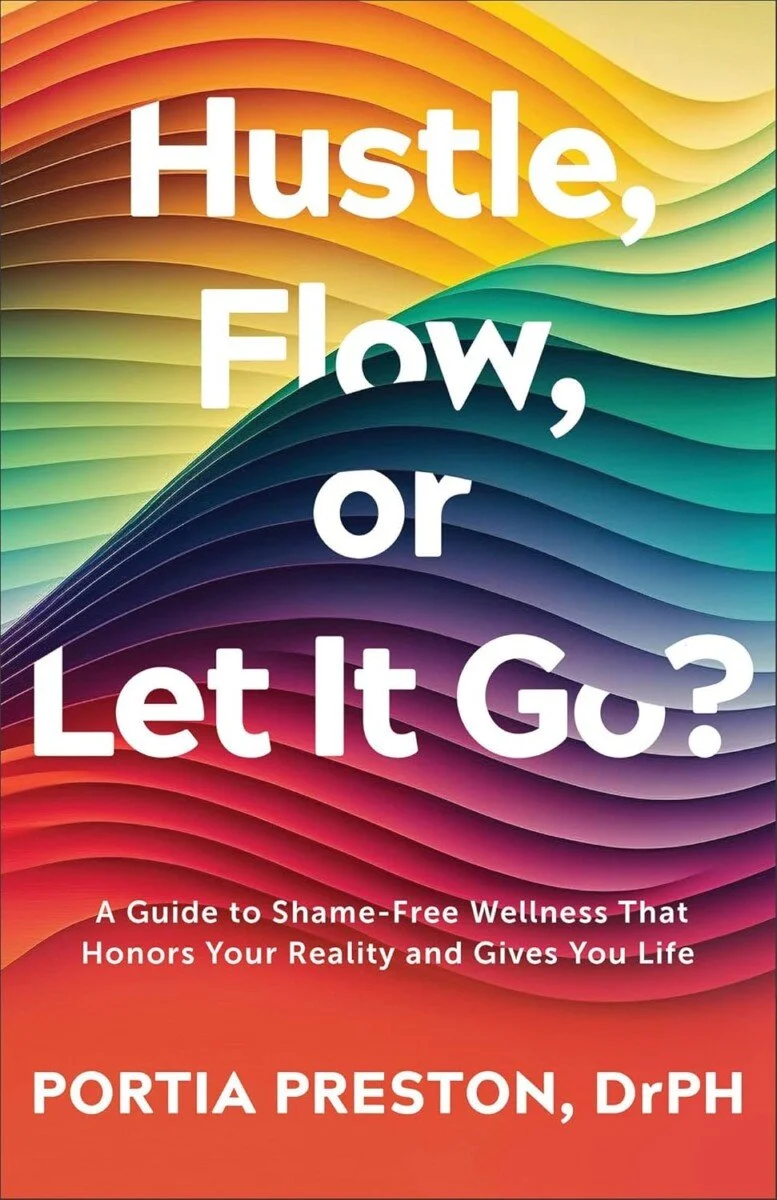
In her book Hustle, Flow, or Let It Go?: A Guide to Shame-Free Wellness That Honors Your Reality and Gives You Life (Self-Care for Everyone, Prevent Burnout, Overcome Stress), Dr. Portia explains that “hustle” isn’t inherently bad. We all have moments where we’re laser-focused, energized, in flow.
The danger comes when hustle begins to erode what you value most:
Your peace
Your health
Your relationships
Your sense of worth
Your identity
Hustle becomes harmful when it’s fueled by shame, comparison, and expectations that never belonged to you.
This is where the shame spiral kicks in—one of the most common yet least-talked-about patterns in women’s mental health.
Stop Using Shame as Fuel: The SANE Framework
One of my favorite insights from Dr. Portia is her SANE Framework, a compassionate method that helps you slow down and break the cycle of overwork and self-punishment.
S – Slow down & reflect
Pause before you push. Ask: What am I feeling right now? What’s driving me?
A – Acknowledge your reality
Not your “should.” Your reality.
Do you have support? Resources? Time? Emotional bandwidth?
N – Navigate with intention
Choose steps that align with your values—not social media’s version of success.
E – Evaluate & adapt
Hustle culture tells us to “power through.”
SANE tells us: Pause. Recalculate. Pivot.
This framework is designed to be sustainable, adaptable, and deeply human.
Black Women & the Hidden Cost of Overwork
Dr. Portia’s expertise as a public health researcher reveals a truth many avoid:
Black women experience the highest levels of chronic stress and the lowest levels of support—across income, education, and profession.
This isn’t just emotional.
It’s biological.
Weathering is real.
Public health research shows that constant stress accelerates aging and impacts:
Cardiovascular health
Maternal mortality
Immune function
Mental health
Overall lifespan
Even Black women with advanced degrees and financial stability face worse health outcomes than white women with fewer resources.
This isn’t a personal failing—it’s structural inequity.
And it’s why conversations about inclusive wellness, systemic support, and rest-as-resistance are not optional—they are life-saving.
The Missing Ingredient in Self Care | Portia Jackson-Preston | TEDxCrenshaw
Caregivers: The Most Overworked & Undervalued Group in America
Whether caring for children, aging parents, disabled loved ones, students, communities, workplaces, caregivers (usually women) are taught to give endlessly and ask for nothing.
We call it love.
We call it duty.
We call it “being strong.”
But as Dr. Portia reminds us:
If the caregiver breaks, the entire system breaks.
Caregivers deserve wellness.
Caregivers deserve boundaries.
Caregivers deserve rest.
Caregivers deserve to be cared for, too.
Neurodivergence, Masking, and the Quiet Labor No One Sees
Another powerful section of our conversation explored neurodivergence—particularly Portia’s late ADHD and autism diagnosis.
She shared the hidden labor of “masking”: appearing calm, organized, social, or neurotypical when your brain is working overtime beneath the surface.
And for Black women, this is doubly complex: cultural conditioning teaches them to hide anything that might be judged, misunderstood, or weaponized.
This is why neuro-inclusive wellness matters.
Accommodations built for neurodivergent people—flexible work, sensory-friendly environments, compassionate leadership—benefit everyone.
So… Can We Actually Let Go of the Hustle?
Not entirely. Life is life.
But here’s the truth: You can introduce more flow.
You can let go of things stealing your peace.
You can choose intentional hustle—when it aligns with your values.
Dr. Portia doesn’t ask you to abandon hustle. She invites you to redefine it.
To stop running yourself into the ground.
To stop shrinking under shame.
To start telling the truth about your capacity.
To create wellness that honors your actual life—not an Instagram version of it.
Black thumbs welcome: Gardening and lessons on resilience | Portia Jackson Preston | TEDxUCIrvine
The Most Important Takeaway?
You are worthy, period.
Not when you’re productive.
Not when you’re perfect.
Not when you’re strong.
Not when you’re hustling.
Not when you’re masking.
Not when you’re caregiving.
Not when you’re achieving.
You are worthy because you exist.
That truth alone can change how you move in the world, how you rest, and how you reclaim your own wellness story.
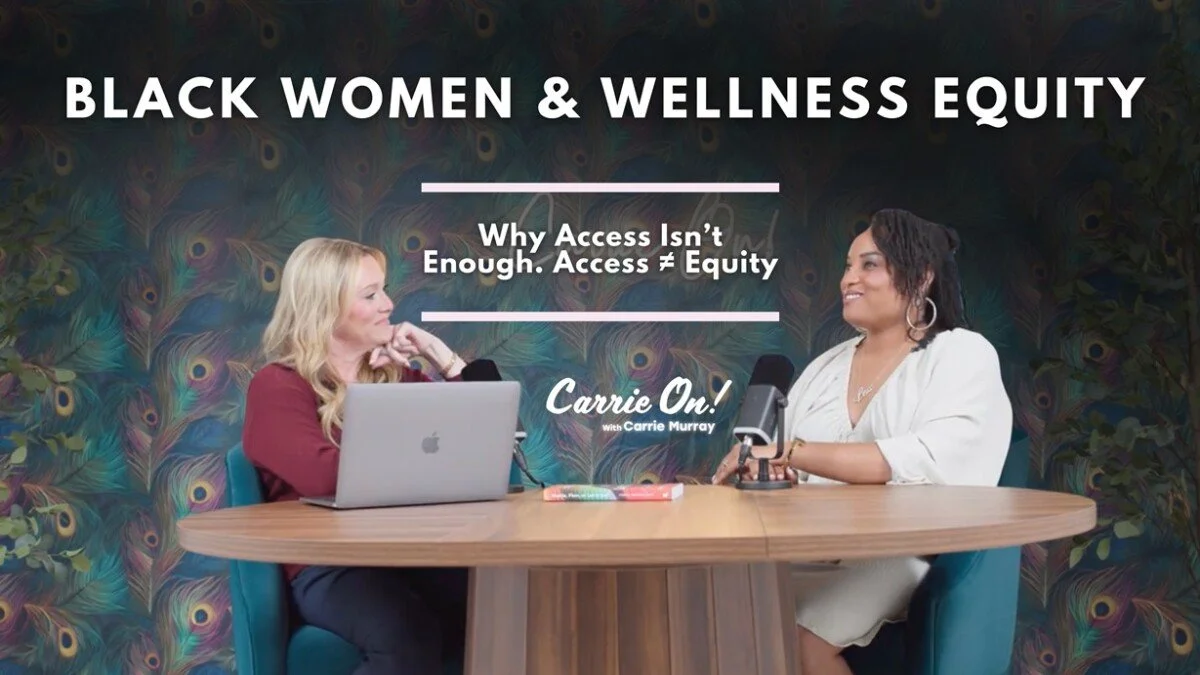
Watch our full conversation on YouTube.
Listen to the episode on Apple Podcasts or Spotify.
Connect with Dr. Preston on Instagram and LinkedIn.
📖 Buy her book, Hustle, Flow, or Let It Go?: A Guide to Shame-Free Wellness That Honors Your Reality and Gives You Life
🩷 Visit her website at https://portiapreston.com.
Until next time, keep your head above the chaos and carry on.
xo,
Carrie
